
Movie
0 comments

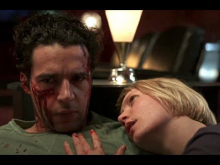 A film about pain.
"Piercing" based on the novel by Ryu Murakami.
(Dir. Nicolas Pesce).
The film explores how the desire for physical pain can stem from emotional agony.
It left me wanting to hide under my seat in the theater, yet also filled me with curiosity. That’s what happens when something is so repulsive, yet the curiosity outweighs it, and you hold your breath, squinting one eye to lessen the "intensity," waiting to see what happens next.
The main characters’ personalities become clear through these two quotes:
Tiaki: "She lifted her T-shirt and saw the ring in her nipple. She had gotten the piercing seventy-one days ago. It hurt when she pushed the needle in and when she pulled it out, but it was a complete success. After a week, the pain was gone. By the thirty-third day, everything had fully healed. Tiaki was proud of herself. And the guys at the body art shop in Shibuya, 133 steps from the entrance of the Tokyu store, were so sweet and helpless. Then she wanted to get a tattoo.
Being able to choose pain for yourself—it’s terrifying yet strangely beautiful. She pulled her shirt up to her neck and tugged at the ring."
Kawashima:
"That wave was directed against the deposits of my own memory, extracting images from the past. My mother, smiling as she posed her beloved son in front of the camera in front of our house. He invites me to pose with him. I refuse, shaking my head, and the smile fades from my mother’s face. Holding the camera with both hands, she turns to me and looks at me with empty eyes. 'Get angry,' I think. 'Come over and hit me.' She still stands there with a stony expression. 'Go on, do it.' My mother looks at me as if I’m furniture, a rock, an insect—not a person."
Both protagonists—a sadomasochist and a father of a newborn daughter struggling with the urge to kill her—are victims of violence.
The girl was abused by her father, the man by his mother.
I thought the film was about BDSM games, but it goes much deeper. It shows us what is normal and what is pathological.
Normal: when people add variety to their sex lives, including elements of BDSM.
Pathological: when they can’t experience pleasure in any other way—only through pain, for example.
The film is heavy.
What I liked was seeing how people in sex aren’t just seeking sex—they’re trying to escape the weight of their past and survive their nightmares.
Not recommended for a date.
Recommended for those who want to understand the dark side of humanity.
P.S. Read Ryu Murakami’s "Piercing"—it delves deeper into the characters’ experiences.
A film about pain.
"Piercing" based on the novel by Ryu Murakami.
(Dir. Nicolas Pesce).
The film explores how the desire for physical pain can stem from emotional agony.
It left me wanting to hide under my seat in the theater, yet also filled me with curiosity. That’s what happens when something is so repulsive, yet the curiosity outweighs it, and you hold your breath, squinting one eye to lessen the "intensity," waiting to see what happens next.
The main characters’ personalities become clear through these two quotes:
Tiaki: "She lifted her T-shirt and saw the ring in her nipple. She had gotten the piercing seventy-one days ago. It hurt when she pushed the needle in and when she pulled it out, but it was a complete success. After a week, the pain was gone. By the thirty-third day, everything had fully healed. Tiaki was proud of herself. And the guys at the body art shop in Shibuya, 133 steps from the entrance of the Tokyu store, were so sweet and helpless. Then she wanted to get a tattoo.
Being able to choose pain for yourself—it’s terrifying yet strangely beautiful. She pulled her shirt up to her neck and tugged at the ring."
Kawashima:
"That wave was directed against the deposits of my own memory, extracting images from the past. My mother, smiling as she posed her beloved son in front of the camera in front of our house. He invites me to pose with him. I refuse, shaking my head, and the smile fades from my mother’s face. Holding the camera with both hands, she turns to me and looks at me with empty eyes. 'Get angry,' I think. 'Come over and hit me.' She still stands there with a stony expression. 'Go on, do it.' My mother looks at me as if I’m furniture, a rock, an insect—not a person."
Both protagonists—a sadomasochist and a father of a newborn daughter struggling with the urge to kill her—are victims of violence.
The girl was abused by her father, the man by his mother.
I thought the film was about BDSM games, but it goes much deeper. It shows us what is normal and what is pathological.
Normal: when people add variety to their sex lives, including elements of BDSM.
Pathological: when they can’t experience pleasure in any other way—only through pain, for example.
The film is heavy.
What I liked was seeing how people in sex aren’t just seeking sex—they’re trying to escape the weight of their past and survive their nightmares.
Not recommended for a date.
Recommended for those who want to understand the dark side of humanity.
P.S. Read Ryu Murakami’s "Piercing"—it delves deeper into the characters’ experiences.